
Blog
Garage Door Noises That Mean Something in San Luis Obispo
A guide for San Luis Obispo homeowners on which garage door sounds can wait and which can't, based on the area's 1973-2012 housing stock and mild coastal climate.
When Waiting Is Fine
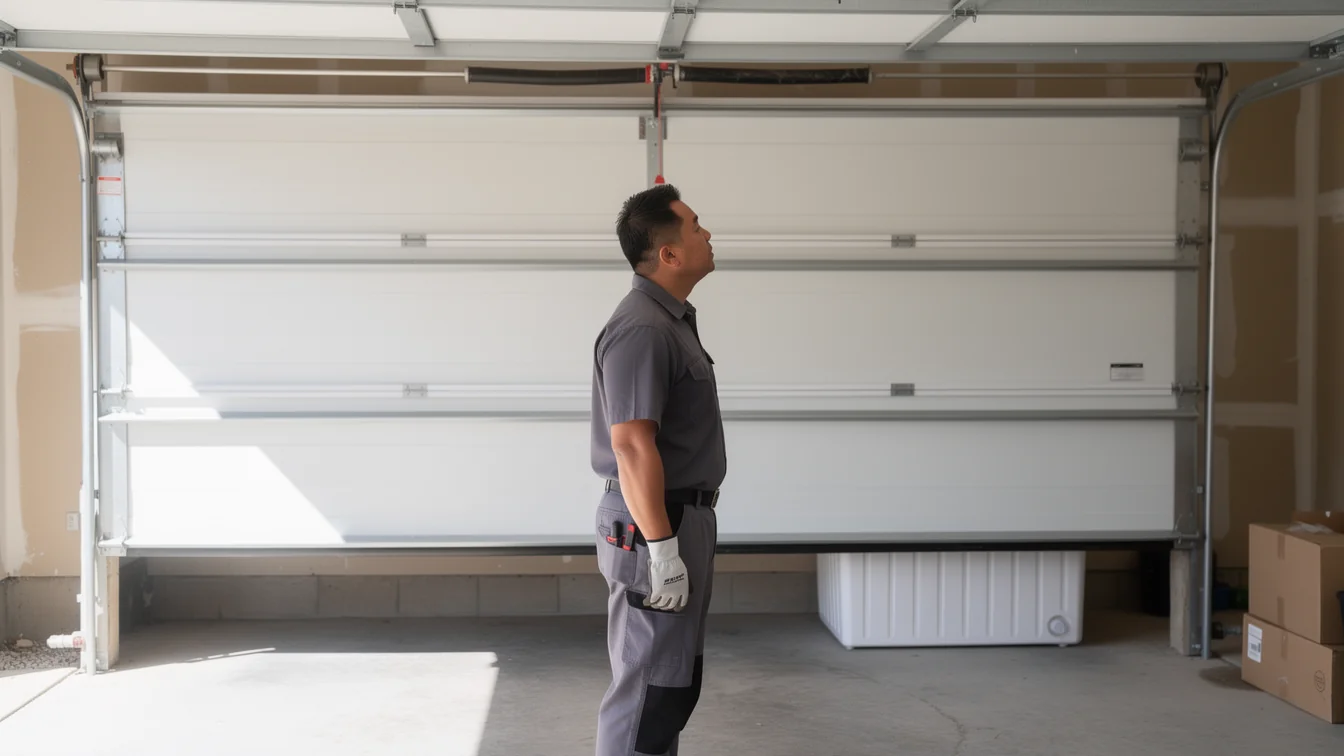
A lot of what you hear from a garage door here is just age talking, not failure. Most houses in this service area went up between 1973 and 2012, with the median landing around 1982 - so a big share of the openers and springs out there are original or close to it. A light rattle on a double track usually means a loose bracket, not a coming breakdown. A chain drive opener that clacks on startup is doing what chain drives do; that's mechanical, not mechanical failure. If your door has always had a soft thud when it seats on the floor, and nothing about that thud has changed, you don't need a call for it. What you're listening for is a change, not a sound. A door that's always squeaked a little and still squeaks a little tomorrow is a door that's fine. Mild coastal air here doesn't put the kind of thermal stress on metal that you'd see in a place with hard freezes or triple-digit summers, so hardware doesn't degrade on a seasonal clock the way it does elsewhere. That buys you time to watch a sound before acting on it, which is a luxury not every climate gives a homeowner.
How Local Conditions Play In
San Luis Obispo sits in a mild temperate band, and that matters more for noise diagnosis than people expect. There's no deep freeze-thaw cycle here to crack grease in a bearing overnight, and no extreme heat to swell a wood jamb against a track in August. That means when something starts making noise here, it's almost always wear accumulated over years, not a weather event. For a house built in the 1980s or 90s - which covers most of the roughly 15 named areas this company works across - that wear has had three or four decades to build. A torsion spring rated for around 10,000 cycles doesn't know what climate it's in; it just counts openings. So the noise you're hearing from a 1982-built house's original spring isn't a product of our weather, it's a product of time, and that's actually a simpler problem to reason about than homeowners in harsher climates get to have. The honest limitation: climate tells you why a noise probably isn't urgent, but it can't tell you a spring's exact cycle count. Only looking at the spring does that.
When to Get Help
Some sounds change the conversation immediately. A loud bang from the spring area, especially followed by the door feeling heavy or not moving at all - that's a broken torsion spring, and it's common in houses old enough to still have their original one. A grinding or scraping that's new and getting louder usually means a roller has failed inside its track, and left alone it can chew the track itself. A rhythmic popping as the door travels, especially if it's gotten faster or sharper over a few weeks, often means a cable is fraying at the drum. Any of these in a house built in the 1973-2012 window - which is most of them in this service area - is worth a call rather than a wait, because the hardware has had the decades to reach end-of-life and the noise is the warning, not the failure itself. We don't recommend DIY spring work; it's not a cost-cutting measure, it's a safety one.
The Situation
This is a service area of roughly 53,311 households, about 27,123 of them owner-occupied houses, spread across some 15 named neighborhoods with a median household income of $103,381. That income level and that housing age together mean a lot of these homes are candidates for opener or hardware upgrades rather than patch repairs - owners here can often choose replacement over repeated fixes when a door's hardware generation is that far along. The work covers San Luis Obispo itself and nearby communities including Los Ranchos (4 mi), Avila Beach (6 mi), Pismo Beach (8 mi), Los Osos (9 mi), Santa Margarita (9 mi), Grover Beach (10 mi), Arroyo Grande (11 mi), and Morro Bay (13 mi), among others. Housing stock across that radius tracks closely with the city's own numbers - mostly 1980s and 90s construction - so the same noise patterns and the same mild-climate logic apply whether the call comes from a house four miles out or thirteen.
Questions
Common questions
My garage door opener makes a grinding sound but still opens the door. Is that urgent?
Grinding that's new or worsening usually points to a roller or bearing failing inside the track. It won't always stop the door immediately, but running it that way can damage the track itself. Given how much of the housing stock here dates to the 1970s-2012 range, it's often original hardware finally giving out - worth a look before it gets worse.
Does the mild climate in San Luis Obispo mean my garage door needs less maintenance?
It means less maintenance driven by weather extremes - no deep freeze or heat swelling to stress hardware seasonally. But houses here built around the median year of 1982 still have springs and cables aging on a cycle-count clock, not a weather clock, so routine wear still applies.
My door has always squeaked a little. Should I worry?
A consistent, unchanged squeak is usually just a dry hinge or roller and not a sign of coming failure. What matters is change: if the sound gets louder, changes pitch, or is joined by a new noise, that's the signal to get it looked at, not the squeak itself.
Recommendation
You Might Also Like
More garage door guides for San Luis Obispo homeowners.
 Garage Door Wear in San Luis Obispo: What's Normal, What's Not
A look at how San Luis Obispo's 1973-2012 housing stock and mild climate shape garage door wear, and when a quirky door is fine to leave alone.
 Openers, Power Cuts, and Your Garage Door in San Luis Obispo
How San Luis Obispo's 1980s-era housing stock and mild climate affect garage door openers during power cuts, and when a stalled door is actually urgent.
 What We Actually Do on a Service Call in San Luis Obispo
A look at what a San Luis Obispo service call covers, from spring and track checks to adjustments suited to this area's 1980s-era housing and mild climate.
Ready when you are
Need a garage door sorted in San Luis Obispo?
San Luis Obispo Garage Door Pros repairs and installs garage doors, springs and openers in San Luis Obispo, CA and the surrounding area.